Aerodynamics conference promo

Consultancy...

Aerodynamics

Durability

Electrical

EMC Engineering

Materials

NVH

Safety

Thermal Management

Vehicle Dynamics


Consultancy : Materials Engineering

From Initial Concept Through to End of Vehicle Life

From meeting the demand for high-performance, light-weight composites to the somewhat controversial field of nano-technology, advances in materials engineering are driving many of industry's most exciting developments.

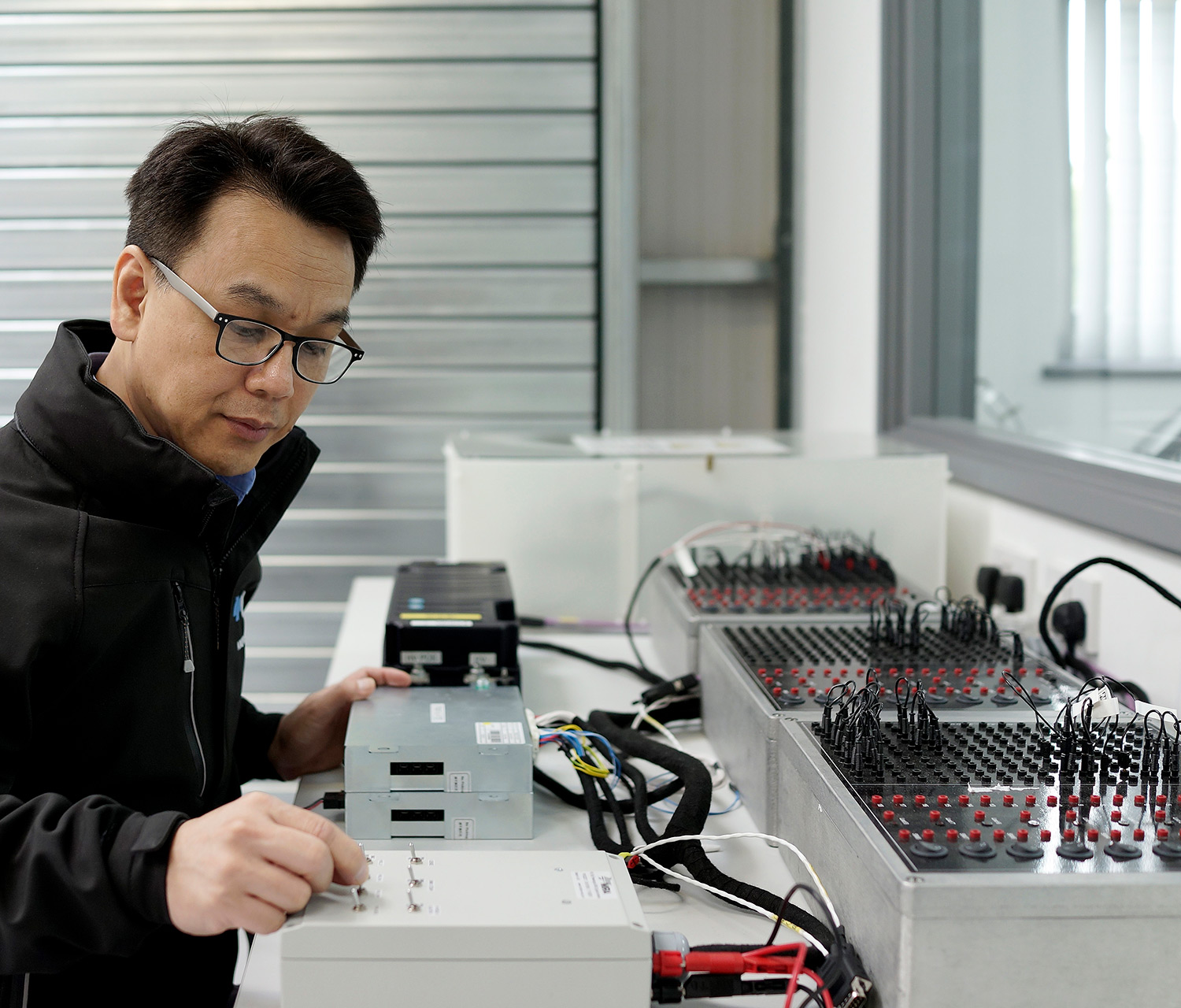
In addition to a comprehensive range of materials tests MIRA's materials engineering centre provides a full materials engineering consultancy  service:

  • Material selection
  • Material characterisation for CAE
  • Failure investigation
  • Expert witness

MIRA's areas of expertise include:

Failure Diagnosis

MIRA's materials engineering department has extensive knowledge of the failure modes of metals, composites and polymers. Whether the failure diagnosis lies in the design, process or choice of material we can assist in developing solutions for field failures.

Our engineers have knowledge of Expert Witness requirements (Joint and Single Expert Instructions), Court report writing and giving evidence. That said, we'd prefer to provide our material's selection expertise in order to avoid these issues.

MIRA's materials engineering team collaborate with either our in-house or our customer's design, manufacturing and FEM engineers in order to avoid failure. Our experience spans a range of fields including:

  • Aerospace
  • Automotive
  • Medical
  • Electronics
  • Business machines
  • Domestic appliances
  • Military

This breadth of materials knowledge enables us to transfer technologies between sectors and inform your decisions for all aspects of:

  • Materials processing
  • Materials applications
  • Product design requirements for the material selected
  • Avoiding potential pitfalls

<<Back to top

Tribology

As one of the pioneering organisations behind 'Thin-Layer Activation' (TLA) MIRA has long been at the forefront of wear measurement and has worked with the world's leading lubricant and additive producers to develop their products.

TLA - Thin Layer Activation Rig for real time wear measurement TLA - Thin Layer Activation Rig for real time wear measurement

Thin Layer Activation (TLA); measures wear in real time

Typical projects include evaluation of:

  • new lubricants and additives
  • emission control effects (e.g. EGR)
  • effects of alternative fuels (e.g. Pb and S levels in gasoline)
  • substitution of materials
  • surface treatments and coatings
  • speed and load effects on wear

Further details of MIRA's TLA service can be found on this brochure:

Click here to download details of MIRA's TLA service for real time wear measurement

Real time wear measurement using TLA pdf (656 KB)

<<Back to top

Metallurgy

MIRA's automotive heritage has enabled us to develop a wealth of understanding of:

  • Ferrous materials; Irons, steels and their alloys
  • Aluminium, magnesium and titanium

For several recent projects MIRA's engineers have applied a relatively old material, SG cast iron, to new applications.  The use of these castings, often in place of steel forgings, has led to reduced tooling costs and lower piece prices without compromising on the required mechanical properties.  This is typical of MIRA's innovative approach to materials engineering.  A good example is MIRA's 'X-frame' chassis:

SG Iron castings were used on MIRA's innovative X Frame chassis

SG Iron castings used on MIRA's innovative' X-Frame' chassis

<<Back to top

Composites and Polymers

The rapidly developing field of composite research is delivering materials which can be tailored to suit a particular application.

MIRA has considerable experience of applying carbon fibre in vehicle body structures to reduce weight taking advantage of its high strength to weight ratio.  Designing a component to be made from carbon fibre requires a different approach to be taken from designs in steel or aluminium.  It has also presented considerable challenges for crashworthiness and EMC (Electromagnetic Compatibility).

MIRA worked closely with McLaren on developing the crashworthiness of their SLR supercar ; the world’s first series-produced car to have a front crash structure manufactured entirely from carbon fibre.

Composite vehicle constructions present new challenges

Safety System Integration for Carbon Fibre Bodied Supercar

The reinforcement of thermoplastic and thermoset polymers with high strength fibres such as glass or carbon has been shown to greatly improve mechanical properties such as ultimate tensile strength.  However composites are also developed for other property improvements.  For example lubricants such as graphite or PTFE  can be added to polymers to lower their coefficient of friction for applications such as low cost plain bearings.

<<Back to top

Ceramics

Automotive applications for ceramic materials include far more than the traditional spark plug insulator.  More recent applications take advantage of their lightweight and extreme heat, wear and corrosion resistance.  They can often perform where conventional materials would fail.  They are particularly suitable for:

  • Engine components; valve discs and stems, sensor substrates
  • Catalysts
  • Pump bearings
  • Brake components such as discs for high performance cars
  • Substrates for electronics

Piezoceramics are found in both sensors and actuators from tyre pressure monitoring, knock sensors and lambda sensors through to in-seat massage systems for passenger cars.

MIRA's materials centre can advise on the selection and application of ceramics and has developed methods of testing them under the extreme conditions in which they are expected to perform.

<<Back to top

Textiles

Automotive textiles broadly cover seating / upholstery fabrics, headlining, carpets, mats, door panels, sun-visors and restraint system (seat belt webbing and airbags) applications.  They are expected to perform for extended periods under particularly harsh conditions including:

  • Ultra-violet (UV) radiation
  • High and low temperatures; typically from - 40°C up to 120°C
  • Rapid temperature gradients
  • High wear and deformations
  • Humidity
  • Even the corrosive effects of sweat and other chemicals

Automotive Textiles such as seat fabrics need to be particularly hard wearing

MIRA's materials specialists have expertise in specifying materials to meet these demands in addition to access to facilities to test textiles either as a sample or as part of an assembly.

<<Back to top

Interiors - Vehicle Interior Air Quality (VIAQ) by analysing Volatile Organic Compounds

MIRA has invested in developing a significant understanding of Vehicle Interior Air Quality (VIAQ). In particular the analysis of Volatile organic compounds (VOCs). VOCs are organic chemical compounds that have high enough vapour pressures under normal conditions to significantly vaporise and enter the atmosphere. VOCs are typically found in paint, carpet backing, plastics and rubbers.

MIRA Vehicle Interior Air Quality (VIAQ) Measurement
VOCs are recognised as being a hazard to health and much of the legislation is driven around “sick building syndrome”; since the interior of a car is considered a potential workplace. As a consequence, the automotive industry is currently working on reducing the quantity of VOCs, formaldehyde and other toxic substances within the cabin space, by enforcing their own emissions limits.

Further details are included in the following brochure:

Vehicle Interior Air Quality (VIAQ) brochure front cover

MIRA Vehicle Interior Air Quality - Test Facility pdf (463KB)


<<Back to top

Joining technology

Although selecting the most appropriate bonding methods for today's sophisticated products is far from straightforward, advances in all joining technologies are presenting new opportunities.  MIRA's materials team keep abreast of the latest developments and help customers and our own design team select and implement the most viable and cost effective solution for their product's materials.

  • mechanical fastening.
  • welding
  • brazing
  • adhesives

Our consultancy service considers the whole new product introduction process from initial concept right through to production line design.  Should problems occur we offer a full failure analysis and resolution service.

Computer Aided Engineering

Finite Element Analysis (FEA) is one of MIRA's core competencies.  Our team of FEA specialists have invested heavily in developing techniques to predict the performance of welds and other joints.

Corrosion

The effects of corrosion range from the cosmetic to, in the worst cases, potentially catastrophic failures.  MIRA's corrosion consultancy service provides:

  • corrosion analysis
  • corrosion protection advice; inhibitor and coating selection
  • developing corrosion test methods

Chemical Effects and Interactions

Fuels, battery electrolyte, anti-freeze, sealants, lubricants and even cleaning products can all react with each other and the materials from which your product is constructed and coated.  Employing MIRA's materials consultants from the design stage can help predict and avoid any undesirable reactions.

<<Back to top

Materials Research

MIRA's Materials engineers have carried out both theoretical and practical research into various automotive and aerospace materials and components which have led on to many successful projects for customers including OEMs and their suppliers.

Many of the projects MIRA has worked on have covered a broad spread of industries and across international boundaries.  A good example being an EC Funded "Life" collaborative research project investigating the recycling of waste materials between different sectors of European Industry. The project, which was lead by the Footwear Industry and called: "The Recycling of Waste Materials within the Footwear Industry and the Trans-sectorial Recycling of Waste Materials between the Footwear and Other Industries".  The Automotive, Furniture and Paper Industries were the three main industries represented in the project with collaborators from the UK, as well as from Spanish, and Portuguese companies.

One of the outcomes of this project was a demonstration of how ABS material, sourced from recycled waste plastic components from end of life vehicles, could be used into the shoe industry for re-manufacture as moulded shoe components (shoe heels).

Other recently completed collaborative research projects clearly illustrate the importance of material selection in the product engineering process:

  • The Diffusion Characteristics of Water through Brake Hose Materials and the Associated Effects on Brake Fluid Boiling Points and Brake Performance
  • The Tribology of Silicon Nitride Ceramic Valve Train Components
  • The Optimisation of Austempered Ductile Cast Irons (ADI) for Engine Crankshaft Applications
  • The Compatibility of Surface Treatments and Oil/Additive systems Under Boundary Lubrication Conditions

Over the years MIRA has published in a large number of reports.  The subject areas they have covered include the following:

  • Fatigue Strength of Cast Iron Crankshafts
  • The Influence of Fillet Rolling on the Fatigue Strength of Cast Iron Crankshafts
  • Corrosion of Automotive Underbody Materials and Finishes
  • Corrosion of Exhaust Silencers
  • Durability of Cam and Tappet Materials, etc.

<<Back to top

Complementary Services and Facilities

Materials testing

Product engineering

Value engineering

Environmental testing

Durability - consultancy

Durability - testing


Case Studies

Safety system integration
for Mercedes-Benz
SLR McLaren

Optimus, our benchmark
HGV cab design

Innovative modular
truck chassis

Tesla high-performance
electric sportscar.


MIRA Ltd. Registered in England No. 402570.
Registered Office : Watling Street, Nuneaton, Warwickshire, UK. CV10 0TU.
MIRA Home Page Link