Aerodynamics conference promo

Testing Services...

Aerodynamics

Thermal Management

Electrical

EMC

Environmental

Durability

Materials

NVH

Ride & Handling

Powertrain

Emissions

Safety & Structural

Test Facilities &
Equipment List


Testing : Materials

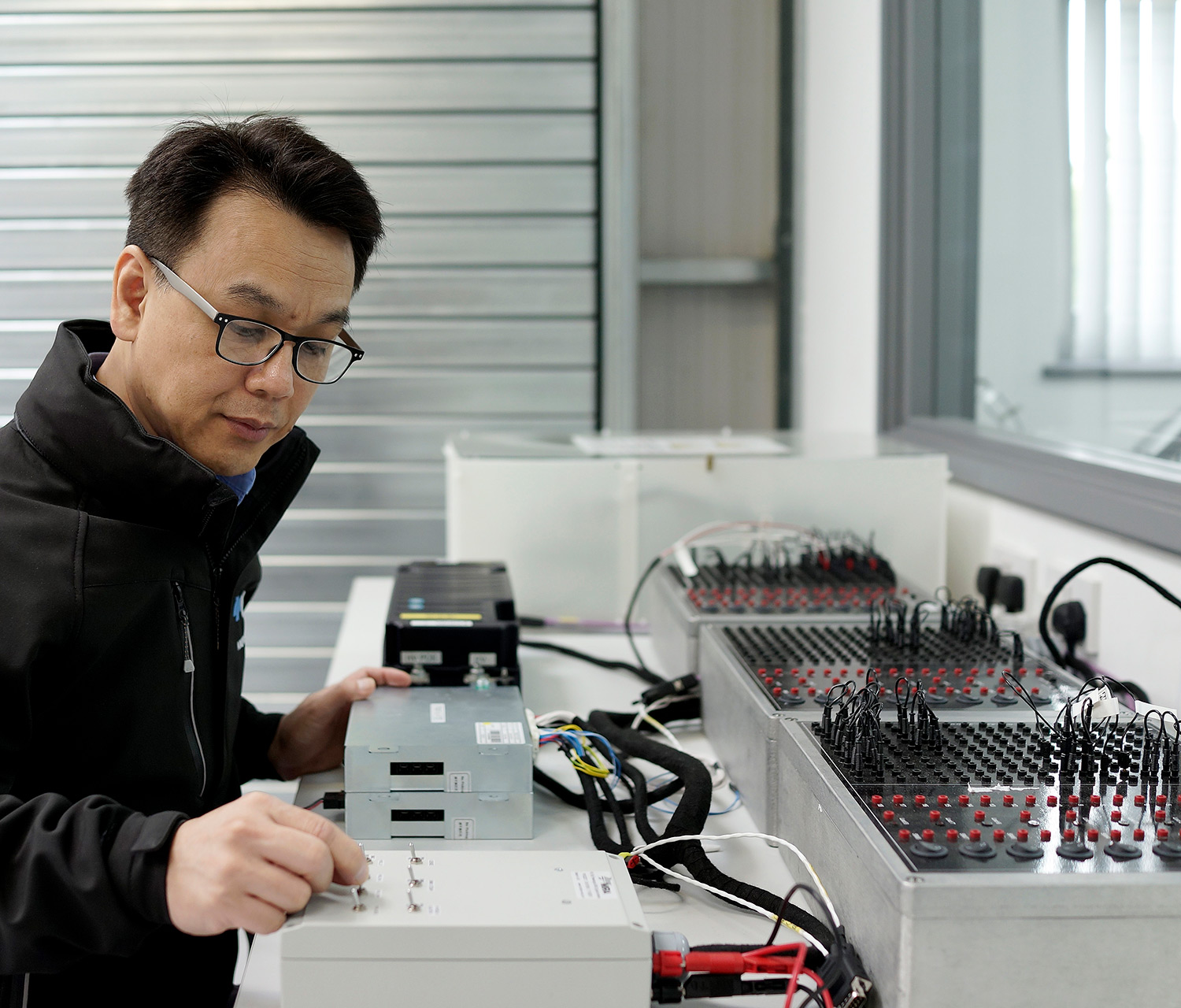
MIRA's purpose-built Materials Laboratory has been developed to serve the changing needs of customers throughout the automotive and non-automotive industries. We offer the perfect platform for research, development and testing of all materials and components.

Materials Testing / Properties for FEA

  • Tensile testing
  • Compreission / crush
  • Fatigue
  • Scratch / hardness
  • Abrasion
  • Poissons ratio
  • Gloss / haze

Filtration and Filter Performance Assessment Products

Tribology

  • Wear testing and wear resistance measurement
  • Thin Layer Activation
  • Coefficient of friction evaluation
  • Surface characterisation
    • Roughness
    • Hardness
  • Lubricant film measurement
  • Lubricant benchmarking

Environmental

  • Corrosion / salt-spray
  • Temperature
  • Humidity
  • UV / weathering
  • Fatigue


Materials Testing and Analysis

The Materials Engineering Laboratory can determine the mechanical properties of various materials, in respect of their elastic properties in both compression and tension, as well as in bending, shear and tear (these latter three properties are dependent on the type of specimen employed). Such information can be used to support FE modelling work, especially for component development involving new materials, as well as for general material use where the actual material data is determined rather than that obtained from materials data books.

Metallurgical investigations can also be carried out on materials and components, whether as part of a component development project or for investigating the causes of component failure.

The properties of materials and components, as affected by aggressive fuels and oils, is also an important area of work, especially with rubber and plastic materials. In general, the change in a measured property, as determined by the Hounsfield Machine, both before and after the specimen is exposed to the liquid, is the important performance criteria. Other properties such as the hardness of metals, rubbers and plastics can also be measured.

Surface topography using scanning laser principles (non-contacting) is another powerful tool to support the tribology work of the Department as well as the other areas of engineering around MIRA.

Two "plain bending, resonant frequency" test machines for assessing crankshaft fatigue are available as well as prototype equipment for the fillet rolling of crankshaft bearing fillets, etc.

<<Back to top

Filtration and Filter Performance Assessment Products

The Materials Engineering Laboratory is responsible for the manufacture and supply of standard contaminants for the assessment of vehicle filters.

These oil and dust contaminants are manufactured to ISO 4020, BS 4552, ISO 12103, ECE 45.01, JIS Z8901, FMVSS and SAE J726, and are used world wide by the automotive OEM and filter manufacturers.

All contaminants are available for purchase and can generally be delivered within short notice (dependant on availability).

Additionally, the Laboratory can offer independent assessment of filter performance for fuel and lubricating oil filters to ISO Test Methods.

<<Back to top

Tribology

Cam and Tappet Wear

MIRA's Materials Engineering Centre specialises in valve train component wear (cams and tappets or cam-followers). There are three 'traditional' MIRA Cam and Tappet Test Machines, two of the 5 station design and one research machine, which is a signal test station type.

These machines are extremely versatile, and many modifications have been made to allow for a wide range of different valve train designs to be operated, from bucket tappets to finger or rocker followers. Recent modifications have followed trends in engine designs allowing roller cam-follower designs to be tested with a range of candidate camshaft materials for different clients.

<<Back to top

Thin Layer Activation

The "Thin Layer Activation Technique", known as TLA for short, has been pioneered by MIRA.  The processing of the TLA components is carried out for MIRA at the Harwell laboratories of AEA Technology Limited.  Briefly, the component of interest (for example a cam-follower) is "activated" in AEA's Tandem Van de Graff Particle Accelerator.  In this accelerator, the beam of energy particles (protons) is focused on to the specific area of interest on the wearing surface of the component. For ferrous components, this beam has sufficient energy to be able to transmute 1 iron atom in 10atoms from 56Fe ( the normally occurring isotope of iron) to atoms of 56 Co and 57 Co.  These radio-nuclides of Cobalt are radioactive and emit measurable quantities of gamma radiation from the surface of the components metallurgical structure.  The metallurgical performance of the surface remains unaffected.

The clever bit is that the depth of this activation can be closely controlled such that there is a direct relationship between measurable activity and the depth of that activity within the surface. Using this relationship, it is possible to determine the wear rate of the component surface as it carries out its design function, since the activity can be measured through, say, the normal rocker cover of an engine.

Using the example of the activated cam-follower, the Department utilises this powerful technique in being able to determine the effect, in terms of cam-follower wear, that may induced by the opposing cam material and, perhaps more importantly, the effect of the lubricant on the wearing couple.

The technique allows wear rates to be determined down to as low as 5 nm/hour.

Normal lengthy test times can be reduced to between 2 or 3 hours, by which time sufficient data will have been collected to be able to differentiate between materials or lubricants under test.  The work is carried out using motored engine cylinder head rigs with no increase in valve spring rates required.

MIRA is fully licensed to both handle and store the active components.  This allows MIRA to offer the technique, either for test rig work as described here or even for evaluation of wear rates on fired engines.

<<Back to top

Environmental Testing

Materials Engineering Laboratory Environmental Testing Materials Engineering Laboratory has a number of test chambers suitable for carrying out accelerated environmental tests over a wide range of conditions, according to SAE, ASTM, BS and OEM Standards.  The range of tests that can be carried out involve salt fog corrosion testing for general component performance work, SWAAT corrosion testing for aluminium alloy materials and components, such as vacuum brazed radiators, and cyclic salt spray corrosion/humidity/dry heat.  This latter test produces very realistic pin point corrosion in painted components.

Humidity testing, involving both controlled and saturated/condensing condition can be carried out on a wide range of components in three test chambers.

Thermal cycling tests, i.e. hot/cold/hot/cold, with or without humidity, together with thermal shock. can be carried out on a wide range of components especially on electronic systems and their related components.An increasingly important area for environmental tests covers the ingress of contaminants, such as the ingress of water and dust into components. Test chambers are available to carry out this type of work.

Ageing of, in general, plastic components and man made fibrous materials for trim, as a result of exposure to sun light, can be artificially reproduced under controlled conditions of intense, UV illumination in a special test chamber.

The effects of common automotive liquids such as fuels, oils, battery acids etc., can be assessed on a wide range of automotive materials and components.

<<Back to top

Complementary Services and Facilities

Materials engineering consultancy

Product engineering

Value engineering

Environmental testing

Durability - consultancy

Durability - testing


Case Studies

Safety system integration
for Mercedes-Benz
SLR McLaren

Optimus, our benchmark
HGV cab design

Innovative modular
truck chassis

Tesla high-performance
electric sportscar.


MIRA Ltd. Watling Street, Nuneaton, Warwickshire, UK, CV10 0TU
MIRA Home Page Link